You know that sinking feeling when you realize you've been doing something risky without knowing it? That's how thousands of liquid restaking investors felt this year after watching $450 million evaporate through exploits, slashing events, and token de-pegs.
Here's the kicker: most of these losses were completely avoidable. The warning signs were sitting right there in the smart contracts, plain as day--if you knew where to look.
Liquid restaking promises double yields by letting you stake your already-staked ETH again. Sounds great, right? But it's also like stacking Jenga blocks on a shaky table. Each layer adds risk, and when one piece fails, the whole tower can come crashing down. And in 2025, with over $20 billion locked in these protocols, those crashes are getting expensive.
What You'll Understand After Reading This
You'll learn to spot the five critical red flags that have already cost investors hundreds of millions. You'll understand why that 20% APY might actually be a ticking time bomb. Most importantly, you'll know exactly what to check before depositing a single token into any liquid restaking protocol.
No technical degree required--just common sense and the willingness to look before you leap.
Quick Refresher: How Liquid Restaking Actually Works
Before we dive into what can go wrong, let's make sure we're on the same page about what liquid restaking actually is.
You start with regular staked ETH (like stETH or rETH). Instead of just holding it, you deposit it into a restaking protocol like EigenLayer. This protocol then uses your stake to secure additional services--think data availability layers or rollup sequencers. In return, you get a liquid restaking token (LRT) that represents your position and earns yield from multiple sources.
It's like renting out your rental property. Double income, but also double the ways things can go sideways.

Red Flag #1: They Can't Handle the Slashing
Remember WaveStake? In May 2025, a consensus fault slashed 9.7% of all delegated rETH--about $56 million gone in an instant. Their insurance vault? A measly $3 million. Investors got back 6 cents on the dollar.
Here's what happened: When EigenLayer enabled native slashing in April, suddenly all that pooled stake was exposed to real penalties. Protocols that had been playing with "soft slashing" (basically monopoly money) were caught with their pants down.
Danger
How to Spot This Red Flag:
- Their "slashing protection" page is one paragraph of vague promises
- Insurance vault holds less than 1% of total value locked (TVL)
- No real-time dashboard showing operator performance
- Insurance is funded with their own illiquid governance token (worthless in a crisis)
What Good Protection Looks Like:
Renzo caps maximum loss at 10% per LRT--period. They have external actuaries verify their coverage ratios quarterly. That's the bare minimum you should accept.
Red Flag #2: Two Guys With a Multisig Control Everything
In September 2024, Bedrock lost $2 million because attackers compromised one signer in their 2-of-3 multisig. They pushed malicious code, drained funds, then destroyed the evidence. Two million dollars, controlled by three people's private keys.
This isn't DeFi--it's CeFi with extra steps.
The Warning Signs:
- Admin controls are just someone's wallet address (not a multisig)
- Upgrades can happen instantly or with less than 48-hour notice
- One person can pause the entire protocol
- No community oversight or veto power
What Secure Governance Looks Like:
Look for at least a 5-of-9 multisig with a 72-hour timelock on all upgrades. Better yet, protocols with community-controlled emergency pauses that limit any single party's power.

Red Flag #3: Their Price Oracles Are a House of Cards
February 2025: An attacker flash-loaned 40,000 ETH, manipulated a thin DEX pool, and convinced VaultFi's oracle that stETH had crashed 22%. The protocol auto-liquidated 13,000 stETH, causing a real 14% de-peg that took 36 hours to recover.
All because they trusted a single price source.
Oracle Red Flags:
- Using just one Chainlink feed (or worse, prices from one DEX)
- No circuit breakers when prices move suspiciously fast
- No backup oracles or sanity checks
- Custom "median" calculations from 3 or fewer sources
Good Oracle Design:
Three layers minimum: primary feed, decentralized backup, governance fallback. Plus hard-coded minimum redemption prices to prevent death spirals.
Red Flag #4: Their Last Audit Was in the Stone Age
DeltaRestake launched their "Auto-Compounder" module three months after their last audit. A missing permission check let anyone drain rewards. Attackers grabbed $7.4 million before anyone noticed.
The audit firm's response? "Not our problem--that code wasn't in scope."
Warning
Audit Warning Signs:
- Single PDF labeled "Audit v0.9 - Draft" (seriously?)
- Last audit was before major feature launches
- Only one audit firm involved
- No public bug bounty program
- Audit doesn't cover slashing logic, oracles, or upgrade mechanisms
What Professional Security Looks Like:
At least two independent audits plus a public contest (like Code4rena). Re-audits for every major deployment. Runtime verification for critical functions. If they're handling $100 million but won't spend $200k on security, run.
Red Flag #5: You Can't Actually Get Your Money Out
March 2025: GeyserLRT traded at a 17% discount for three days after governance exploit rumors. Why? Only $9 million of liquidity for a $340 million token. When everyone rushes for the exit, not everyone makes it out.
Liquidity Red Flags:
- Over 60% of tokens sit in one pool or exchange
- Daily volume less than 2% of circulating supply
- Redemption takes more than 7 days
- "Batch unstaking" with mysterious timing
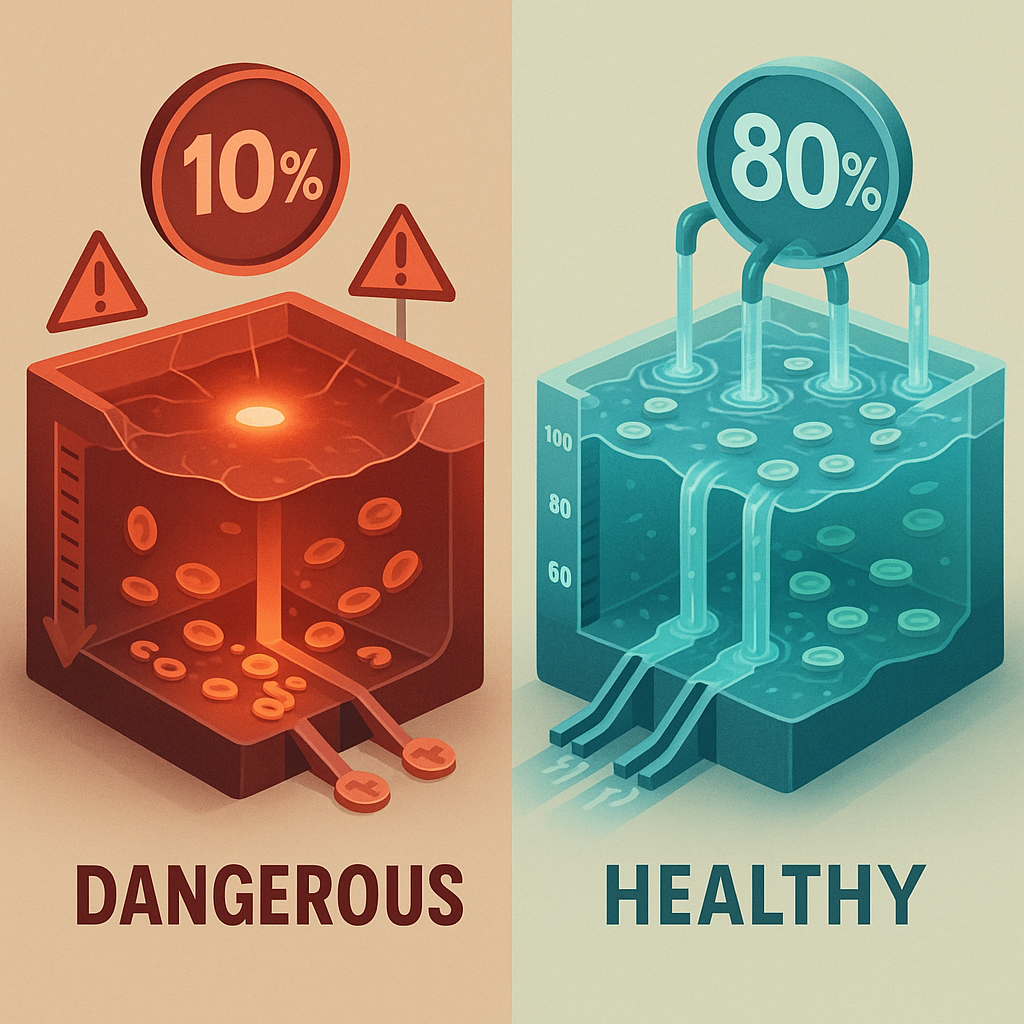
- Exit liquidity less than 10% of circulating tokens
Healthy Liquidity Looks Like:
Multiple deep pools across DEXes. Instant redemption options (even at a small discount). Clear, predictable unstaking timelines. Some protocols even have "mint-on-swap" features that create tokens as needed to absorb sell pressure.
Your Protection Checklist (Save This)
Before depositing into ANY liquid restaking protocol, ask:
- Slashing Protection: Is there a hard cap on losses? Is insurance more than 3% of TVL?
- Who's in Control: Is the admin at least 5-of-9 multisig with 72-hour timelock?
- Recent Audits: Are there two+ post-launch audits covering ALL current features?
- Oracle Security: Multiple independent price feeds? Deviation circuit breakers?
- Can You Exit: Is exit liquidity at least 10% of circulating supply? How long to unstake?
- Team Transparency: Are founders doxxed? Is there a real company behind this?
- Live Monitoring: Can you track slashing events and TVL changes in real-time?
Tip
The Hidden Sixth Red Flag: You Can't Read the Contracts
Here's the thing about all these security checks--they assume you can actually verify what the protocol claims. But when the smart contracts controlling billions look like this:
function _processSlashing(uint256 _amount, address _validator) internal {
    require(slashingOracle.verify(_validator), "E1");
    // ... 200 more lines of nested logic
}
How do you know what's really happening with your money?
This is exactly where ChainDecode becomes your security lifeline. Paste any liquid restaking contract address and see--in plain English--exactly how slashing works, who controls upgrades, and what hidden fees exist. It's like having x-ray vision for smart contracts. Because in liquid restaking, what you don't know absolutely can hurt you.
The Real Cost of Ignoring These Red Flags
$450 million in losses. That's not a typo. That's real money from real people who thought 20% APY was worth the risk. Some lost their entire positions to slashing. Others watched their tokens de-peg 30% with no way to exit. Many are still waiting in 21-day unstaking queues, watching prices fall.
The crypto space loves to say "DYOR"--do your own research. But when the research requires reading Solidity and understanding complex DeFi mechanics, most people just trust the marketing. That trust is costing millions.
Looking Forward: What Changes in 2025
The liquid restaking space is maturing fast. Good protocols are implementing better safeguards:
- Runtime verification becoming standard
- Insurance protocols specifically for slashing coverage
- Standardized security scoring systems
- Regulatory clarity pushing better practices
But bad actors are evolving too. New protocols launch daily, many copying code without understanding the security implications.
Your best defense? Stay educated. Check contracts before depositing. Re-evaluate your positions monthly. And always--always--verify before you trust.
Because in liquid restaking, the highest yields often come with the highest risks. Make sure you know which one you're signing up for.